OFFICIAL WHITEPAPER
Pierce Labrador
info@preciousmetalshq.com
preciousmetalshq.com
What was once considered unattainable, allocating individual pieces of gold and silver for everyday use in the monetary system, is now achievable through advancements in blockchain technology. The PRECIOUS Metals HQ platform proposes a currency framework that uses real-world asset (RWA) tokenization, leveraging the XRP Ledger (XRPL) to enable fully allocated ownership of physical gold and silver. By combining the intrinsic value of precious metals with XRPL’s rapid, cost-effective transactions, the PRECIOUS Metals HQ platform eliminates intermediaries, ensures transparency, and supports economic sovereignty. The Proof of Allocation (PoA) protocol, supported by Non-Fungible Tokens (NFTs) and Multi-Purpose Tokens (MPTs), offers a citizen-centric alternative to the centralized U.S. dollar system, addressing its inefficiencies and inequities. This white paper presents a scalable, asset-backed reserve currency model, the XRP Gold Standard, that provides individuals with direct access, aligns with constitutional principles of sound money, and supports a revised approach to global financial structure.
Table of Contents
3. Historical And Technical Foundations 5
3.1 History Of United States Currency And Precious Metals 5
3.2 Bitcoin As A Programmed Precious Metals Market 6
3.3 ‘Upgraded’ Blockchain Protocols 7
4. Critique Of Current Models 8
5. Proof Of Allocation (PoA) 14
5.1 Checkout and Tokenization Process 14
5.2 Key Components Of The PoA Framework 20
7.4 Keys to the Kingdom Membership 25
8. General Technical Overview 27
11. Additional Links And Resources 32
11.1 Platform Links 32
11.2 XRPL Technical Resources 33
11.3 Regulatory Sources 33
11.4 Figures 34
The resurgence of precious metals in the monetary system has gained traction as confidence in the U.S. dollar collapses. At the forefront of this shift is blockchain-based real-world asset (RWA) tokenization, which expands opportunities for ownership and economic engagement.
To understand the urgent need for this new paradigm, it is critical to examine the foundational limitations of the current U.S. dollar system. Originally developed to overcome the perceived constraints of the gold standard, the modern dollar has become a fully digital, software-driven currency characterized by unlimited supply and heavy reliance on derivative markets. This “Wealth Without Work” model favors elastic digital expansion and centralized authority, inserting countless intermediaries that breed inefficiency, opacity, and erosion of trust.
While this whitepaper centers on the precious metals market, the same structural flaws constrain all real-world assets: real estate, commodities, stocks, and beyond, reducing them to speculative instruments rather than direct, verifiable stores of value.
These systemic defects manifest most clearly in the unallocated and fractional-reserve models that dominate today’s markets. Every digital representation of a backed real-world asset, whether issued through legacy instruments like ETFs and futures or modern blockchain tokenization and stablecoins, is subject to formal backing requirements, yet compliance is still satisfied with nothing more than quarterly self-reported reserves, and blind faith in custodians. The pattern is always the same: market manipulation, fictitious supply, and detachment from physical reality, manufacturing artificial scarcity or abundance while exposing holders to persistent counterparty risk and manipulation.
Financial institutions consistently fail to earn any trust in verifying their own reserves, making the lack of real transparency in these governance models one of the greatest ongoing threats to economic liberty.
The PRECIOUS Metals HQ platform introduces a verifiable, asset-backed model through its Proof of Allocation (PoA) framework. Integrated with the XRPL, the platform ensures 1:1 backing with physical precious metals stored in a secure vault, guaranteeing direct, verifiable ownership of specific physical units. By leveraging blockchain’s decentralized technology, it eliminates dependence on third parties and custodians, supporting trust through transparent, immutable records. The PRECIOUS Metals HQ platform’s PoA framework aligns digital assets with real-world value, fostering equitable access and economic sovereignty through a single, wallet-specific fungible token that aggregates verifiable physical value without inflationary issuance. This approach counters unlimited supply, counterparty risks, opaque reserves, and speculative bubbles, supporting sound money in its functional form by presenting precious metals as a currency rather than mere derivative forms. By addressing the inefficient processes of unbacked asset models, the platform paves the way for a citizen-centric financial ecosystem that prioritizes independent sovereign banking.
To provide clarity for the concepts discussed, the following terms are defined as used in this whitepaper:
Tokenization
In this paper, tokenization refers to the process of converting rights to an asset, typically real-world assets (RWAs), into digital tokens on a blockchain. These tokens represent fractional ownership, value, or access rights to the underlying asset and can be allocated, traded, or managed on the ledger. Tokenization enables secure, transparent, and efficient distribution of asset ownership or value to multiple parties, leveraging blockchain technology to ensure immutability and verifiability.
Real World Assets (RWAs)
In this paper, Real World Assets (RWAs) refer to tangible or intangible assets, such as real estate, commodities, artwork, intellectual property, or financial instruments, that exist outside the blockchain but are represented digitally through tokenization. This digital representation allows RWAs to be fractionalized and allocated with verifiable ownership on the ledger.
Allocation
In this paper, allocation refers to the strategic distribution or assignment of assets, rights, or value to specific entities or purposes. This includes (1) the apportionment of ownership rights, such as through the tokenization of real-world assets (RWAs), where portions of an asset’s ownership are assigned to third parties via digital tokens, and (2) the designation of value or resources, such as non-gold/silver-backed currencies (e.g., fiat or digital currencies), to facilitate transactions, investments, or economic activities. In both cases, allocation involves a deliberate division or assignment to achieve specific financial, operational, or strategic objectives.
XRPL Multipurpose Tokens (MPTs)
XRPL Multipurpose Tokens (MPTs), such as the $PRECIOUS Multi-Purpose Token are fungible digital assets representing proportional claims on the aggregate real-time market value of a holder’s tokenized precious metals portfolio. Each MPT is interchangeable with any other MPT of the same issuance, allowing seamless division, combination, and transfer without loss of proportional value. Unlike conventional commodity-backed fungible tokens tied to uniform assets, MPTs dynamically track a portfolio that may include diverse physical items, ranging from generic bullion to rare numismatic pieces, whose individual market premiums vary. This design enables efficient peer-to-peer payments, settlements, and DeFi utility on the XRPL while preserving the underlying heterogeneity and intrinsic value of physical metals. Official XRPL Multi-Purpose Tokens (MPTs): https://xrpl.org/docs/concepts/tokens/fungible-tokens/multi-purpose-tokens
Non-Fungible Tokens (NFTs)
In this paper, non-fungible tokens (NFTs) refer to unique digital tokens on a blockchain that represent ownership or proof of authenticity of a specific asset, right, or item, typically a real-world asset (RWA) like artwork, real estate, or intellectual property. NFTs are indivisible and distinct, with unique metadata ensuring their non-interchangeability. NFTs enable the tokenization of one-of-a-kind assets, providing secure, transparent, and verifiable ownership records that can be traded within a blockchain ecosystem. Official XRPL Non-Fungible Tokens (NFToken) documentation: https://xrpl.org/docs/concepts/tokens/nfts
Gold Standard
In this paper, the gold standard refers to a bimetallic monetary system in which a currency’s value is directly linked to fixed quantities of precious metals, primarily gold and silver, with both metals serving as legal tender at a defined ratio. Historically operationalized through systems like the U.S. Coinage Act of 1792, this bimetallic standard ensured that currency, whether coins or redeemable notes, was backed 1:1 by physical gold and silver. The term encompasses any historical precious metals-backed monetary framework, enacted by governments, where multiple metals (gold, silver, and in some cases others) collectively underpin the currency unit at legally defined ratios.
Currency Framework
A currency framework encompasses the integrated ecosystem of institutions, governance structures, processes, and technologies that enable the issuance, circulation, and management of a currency to facilitate secure and efficient transactions across diverse networks, including business-to-business (B2B), business-to-consumer (B2C), and peer-to-peer (P2P) interactions. This includes central banks, commercial financial institutions, payment and settlement networks (e.g., real-time gross settlement systems or automated clearing houses), regulators, and supporting protocols, all coordinated to ensure monetary stability, liquidity, and compliance with legal standards. For instance, the U.S. dollar’s framework involves the Federal Reserve as the central issuer, thousands of intermediary banks, large-scale RTGS networks like Fedwire, and oversight from bodies such as the Securities and Exchange Commission and the Financial Crimes Enforcement Network. The primary aim is to achieve sustainable operational efficiency, minimizing costs, risks, and frictions while promoting economic participation and resilience. This whitepaper proposes a novel currency framework rooted in blockchain technology, leveraging the XRPL for tokenization and payments to enable fully allocated, intermediary-free ownership and use of physical precious metals as a digital currency.
The historical role of precious metals in establishing sound money, as enshrined in the U.S. Constitution and early legislation, provides the foundational principles that modern blockchain technology now revives and extends. This section examines the evolution of money in the United States, tracing the gradual decoupling of fiat from physical backing, and explores how blockchain protocols, particularly Bitcoin’s emulation of gold’s scarcity and the XRP Ledger’s consensus advancements, represent a digital evolution of these timeless principles.
The U.S. Constitution (Article I, Section 10, Clause 1) explicitly mandates the role of precious metals in the nation’s monetary system: “No State shall… make any Thing but gold and silver Coin a Tender in Payment of Debts.” Operationalized by the Coinage Act of 1792, this directive established precious metals as the foundation of the United States Dollar, with the United States Mint producing pure gold and silver coins. This gold standard fostered trust through distributed verification by miners, refiners, and merchants, ensuring currency reflected tangible value.
Gold’s influence endures in modern economic frameworks, particularly in blockchain technology, where its principles are embedded. For example, Bitcoin brands itself as “digital gold,” emphasizing scarcity and censorship-resistant, inflation-proof value storage, while blockchains “mint” tokens and stable”coins”, mirroring the historical creation of gold and silver coins. This terminology underscores gold’s lasting role as a symbol of trust and intrinsic value in digital systems.
However, the gradual decoupling of precious metals from the economy, driven by the lack of technical infrastructure to sustain a metals-backed currency in a globalizing world, relegated gold and silver to derivative forms and retail products rather than functional money. The dollar’s supply, once constrained by the physical world, was now governed entirely by code running on mainframes, databases, and eventually the Federal Reserve’s real-time gross settlement systems. Blockchain technology is the next upgrade in the digital transformation of that same software layer, only far more inclusive and transparent. Where the dollar sought to solve the rigidity of metal by replacing it with programmable fiat, blockchain now aims to solve the dollar’s centralization, opacity, and infinite issuance by adding more programmability with verifiable scarcity and decentralized control. The absence of such technology in the 20th century entrenched fiat inefficiencies: fractional reserve banking, unbacked digital assets, and centralized monetary control. Today, blockchain-based RWA tokenization provides the missing infrastructure to restore constitutionally compliant, asset-backed money in a fully digital, globally scalable form.
To contextualize the significance of precious metals, notable historical figures have emphasized their critical role in currency systems, highlighting the enduring value of sound money:
These perspectives underscore the historical significance of precious metals and the need to address the flaws in modern currency systems, as explored in the following sections.
Blockchain aims to resolve issues by increasing the programmability of existing software based USD currency. For example, Bitcoin’s Proof-of-Work (PoW) design deliberately emulates traits of the precious metals market, particularly gold, into a software-based system. Its fixed supply, mining process, and decentralized consensus mirror the gold standard’s protocol, characterized by scarcity, resource-intensive acquisition, and distributed trust through verification by miners, refiners, and merchants. By embedding these characteristics, Bitcoin aims to replicate gold’s role as a decentralized, inflation-resistant store of value while enhancing its usability for modern transactions. This crossover reflects a shared emphasis on scarcity, distributed trust, and independence from central control, positioning Bitcoin as a digital evolution of the gold standard’s principles.
Key Similarities Between Bitcoin and the Gold Standard:
Building on Bitcoin’s digital adaptation of gold’s principles, advanced blockchain protocols, most notably the XRP Ledger’s Ripple Consensus Protocol (RCP), solve the scaling limitations that plagued early networks like Bitcoin and Ethereum while modernizing the ethos of the gold standard for today’s financial systems.
With over a decade of continuous, real-world testing, blockchain technology has proven its ability to serve as the foundation for a global financial framework. The true strength of both gold and cryptocurrencies lies in their underlying protocols; when they are treated merely as alternative payment rails or speculative investment assets, their most powerful qualities are nullified. Without a robust currency framework to support them, cryptocurrencies risk the same fate that befell gold and silver: their permissionless, trust-minimizing principles were gradually eroded the moment their protocol was abandoned.
This historical lesson underscores the urgent need for a restructured monetary framework that reunites physical assets with cutting-edge blockchain infrastructure. The XRPL’s RCP achieves consensus through a network of independent validators without energy-intensive mining, delivers a fixed supply of 100 billion pre-mined XRP (echoing gold’s natural scarcity), and provides deterministic finality with irrevocable settlement in seconds.
Moreover, the XRPL’s consensus protocol inherently eliminates front-running and Maximal Extractable Value (MEV), exploitative practices that plague mempool-based blockchains like Ethereum, where pending transactions can be reordered or sandwiched for profit through priority bidding or timing manipulation. Similarly, traditional settlement systems like ACH and Fedwire permit intermediaries to reorder pending payments or exploit queue visibility, creating unfair timing advantages and value extraction. By applying transactions in a canonical, deterministic order without a public mempool or competitive bidding mechanisms, the XRPL ensures fair, predictable, and manipulation-resistant execution for all participants, further underscoring its superiority as the foundation for a transparent, equitable, asset-backed currency framework.
This deterministic design, as leveraged in our Proof of Allocation framework, enables true software synchronicity: seamless, real-time alignment between market data feeds, on-chain records, off-chain metadata (via IPFS), and physical vaulted assets, while aligning the entire system with the public’s interest. It eliminates the fragmentation and latency that plague legacy digital currency frameworks, ensuring verifiable, physics-bound value remains in perfect harmony across layers and serves equitable, transparent outcomes for all participants rather than centralized gatekeepers.
By natively supporting tokenization of real-world assets, the XRPL consolidates dozens of legacy third-party processes into a single, unified platform, aligning digital records with tangible, market-driven supply and demand while effortlessly tracking physical inventory such as precious metals.
The fit is so precise that the technology feels purpose-built for this exact use case. The result is an improved finance (DeFi) layer that enables cryptocurrency to serve as sound electronic money rather than remain primarily a speculative asset. In truth, most blockchain projects have merely upgraded the software of an already-digital dollar, attempting to fix software with more software when this is not the issue, the root problem is the absence of verifiable physical backing.
Modern financial systems, while technologically advanced, suffer from persistent structural flaws. This section critically examines four interrelated manifestations of these defects: the unallocated and fractional-reserve practices in stablecoins, the arbitrary digital supply inherent in software-only currencies, the pooling, derivative mechanisms that dominate precious metals markets, and the fragmented, multi-layered configuration of legacy financial infrastructure itself. Together, these models perpetuate opacity, inflation vulnerability, and speculative distortion. These are issues that the Proof of Allocation framework directly addresses through blockchain technology.
Stablecoins, such as Tether, mirror the existing reserve currency model, replicating the U.S. dollar’s flaws detailed earlier in this paper. This framework ignores blockchain’s greatest strength: automated accountability through immutable code. Despite their blockchain-based innovation, many still rely on unverified or partially reserved holdings. Tether, for instance, continues to raise concerns about fraud and market distortion due to auditing practices that fall short of full transparency.
Emerging regulations are accelerating change. The European Union’s Markets in Crypto-Assets Regulation (MiCA), fully applicable since December 2024, saw its transitional period for existing providers conclude on July 1, 2026. It imposes stricter reserve, transparency, and supervisory standards for stablecoins and crypto-asset service providers. See official [ESMA MiCA overview] (https://www.esma.europa.eu/esmas-activities/digital-finance-and-innovation/markets-crypto-assets-regulation-mica). Similarly, the U.S. Guiding and Establishing National Innovation for U.S. Stablecoins (GENIUS) Act, signed into law in July 2025, requires 1:1 high-quality reserves (e.g., cash and Treasuries), monthly disclosures, and federal oversight for payment stablecoins. However, regulators missed the July 18, 2026 deadline for final implementing regulations, with the framework now expected to take effect no later than January 18, 2027. See [GENIUS Act full text (Public Law 119-27)](https://www.congress.gov/bill/119th-congress/senate-bill/1582/text), signaling a global push toward greater accountability.
However, these reforms still highlight the persistent limitations of trust-based digital frameworks, including ongoing concerns over enforcement gaps, reserve composition, and full audit standards. In contrast, the Proof of Allocation (PoA) framework offers a fully transparent, physics-bound alternative that ties digital assets to verifiable, specifically allocated physical holdings from the moment of purchase. Looking forward, PoA could enable the creation of a new United States Treasury Dollar, a Universal Monetary Unit anchored in tangible precious metals, providing a sovereign, asset-backed digital currency untethered from fractional-reserve pitfalls and unbacked vulnerabilities that plague both legacy fiat and current stablecoins. Currency cannot be software-only, no matter how sophisticated the code. Without physical anchors, digital systems breed speculative bubbles, as seen in unbacked tokens or fiat inflation.
Precious metals stand apart from all other real-world assets, such as real estate, rare commodities, or stocks, because they are already meaningfully fractionalized in physical form for monetary transactions. The prevailing view is that metals cannot support the fine-grained, individual-unit allocation required in a modern digital economy, unlike the digital dollar. This mistaken premise forms the foundation of current fractionalization approaches, which rely on dividing physical assets into abstract, smaller digital portions rather than honoring specific units.
Governments and refiners have long produced coins and bars in standardized denominations (e.g., 1 oz, ½ oz, ¼ oz, 1/10 oz, and even gram-sized units), enabling practical division without destroying value or requiring trusted intermediaries to split ownership. This natural divisibility supports monetary transactions both online and offline, allowing standardized coins and bars to function as bearer instruments for direct, peer-to-peer payments in any environment, digital or physical, without reliance on third-party networks, banks, or intermediaries.
The natural divisibility of physical coinage eliminates the need for digital systems to introduce artificial fractionalization through pooling or derivative claims.
This false dichotomy has perpetuated the flaws of both worlds in legacy systems. PRECIOUS Metals HQ resolves this tension by extending the intrinsic scarcity and natural divisibility of physical precious metals bars and coins into the digital realm via the XRPL. Native support for indivisible NFTs represents specific physical units, while the fungible layer enables seamless portfolio utility and transferability. The XRPL’s token standards thus seamlessly bridge physical bullion’s inherent divisibility to digital ownership and real-time tracking, without artificial pooling or intermediary friction.
Critically, the fungible layer employs a single $PRECIOUS MPT per wallet whose value reflects the aggregate portfolio, avoiding inflationary per-unit minting common in fiat and most tokenized assets.
While software alone is not suitable as a standalone reserve currency, its technical properties become powerful enablers when layered as infrastructure underneath a truly hard, physics-bound asset like precious metals. Whether capped at 21 million (Bitcoin) or infinitely expandable (central-bank digital fiat), digital supply remains arbitrary, and in the case of pure digital assets, infinitely replicable with no marginal cost, ultimately governed by programmers, committees, or algorithms rather than the immutable laws of physics and geology.
Purely software-based currency cannot escape this structural reality: when no physical commodity anchors value, the backing defaults to human action and labor itself, a form of economic enslavement. Humans become the ultimate ‘commodity’, their productivity, taxes, debt service, and endless economic output required to sustain the system’s expansion and prevent collapse. Technical negligence results in greater human effort to maintain purchasing power, eroding sovereignty and turning people into the expendable resource behind the currency.
Physical currency, by contrast, derives its scarcity from nature itself: every ounce of gold or silver must be prospected, mined, refined, and assayed at real cost, imposing a hard, market-driven ceiling on monetary expansion. Yet physical money alone is insufficient for a connected world.
Digital currency inverts these strengths and weaknesses. It excels in speed and convenience, settling borderless transfers in seconds via blockchain protocols, with infinite divisibility for micro-payments and native protocol programmability. Cross-examining the two reveals a core tension: physical offers sovereignty and resilience but lacks efficiency; digital provides scalability and speed but sacrifices trust and tangibility. Rather than draining or supplanting the other, the true potential lies in their synergy: technology enhances the world’s natural resources like precious metals, delivering ‘double the power’ through RWAs tokenized in a way that amplifies intrinsic value without extraction.
This core tension (physical scarcity versus digital scalability) cannot be resolved by abandoning one for the other. Instead, the Proof of Allocation framework combines the immutable laws of geology with the speed and programmability of blockchain.
The legacy financial system’s flaws stem not only from individual practices but from its fundamentally complex configuration. Built incrementally over decades, it consists of a two-part architecture, messaging and processing/settlement, that requires constant reconciliation between separate systems.While the messaging layer itself can operate relatively quickly, the processing and settlement layer remains slow due to multi-hop intermediation, reconciliation, and legacy infrastructure. It relies on fragmented messaging and settlement layers along with heavy intermediation. To solve scaling limitations, the system deploys artificial assets and abstract claims, removing the need for real-time asset verification precisely because it cannot natively bridge value across systems in a transparent, real-time way. This is especially important in the case of RWAs that consist of physical inventory. Fractional-reserve practices and rehypothecation further create multiple claims on the same asset. Lack of verification means lack of true representation, which means anything goes. This creates opacity, multi-hop friction, increased costs, and systemic risk at every layer. The lack of real-time asset verification further creates an environment where scams and fraudulent claims become significantly easier to perpetrate.
In contrast, the Proof of Allocation framework represents the consolidation of the existing financial architecture’s fragmented processes. It introduces a streamlined, sovereign configuration that aligns digital records directly with physical reality and completely removes the friction between real-time physical supplies and their digital representations. By treating all hard assets (RWAs) as verifiable, physics-bound collateral, PoA eliminates artificial asset creation and delivers end-to-end transparency and efficiency in a single unified system.The table below illustrates this fundamental difference between the legacy financial configuration and the PoA framework.
Mainframes, relational databases (Oracle, SQL Server), real-time gross settlement systems (Fedwire, CHIPS, TARGET2, SWIFT), and proprietary software stacks. Much of it still runs on COBOL-era code with bolt-on digital layers. Settlement often involves batch processing (ACH, T+1/T+2), multiple ledgers that must reconcile manually or via costly middleware.
XRPL as the core ledger with deterministic finality in 3–5 seconds, native support for Multi-Purpose Tokens (MPTs) and Non-Fungible Tokens (NFTs), and a lightweight orchestration layer. MPTs provide dynamic, wallet-specific aggregation of hard asset (RWA) value, while NFTs deliver granular, item-specific ownership records. Final ownership transfer and settlement occur fully on-ledger and client-side.
Multi-hop intermediation — originator bank → correspondent banks → clearing houses → custodian banks → central securities depositories (e.g, DTCC). Each hop introduces its own ledgers, risk checks, compliance rules, and reconciliation steps.
Single integrated flow where purchase, allocation, and settlement of hard assets (RWAs) occur atomically. The ledger itself serves as the single source of truth with no multi-hop reconciliation.Redemption is symmetric with no multi-hop reconciliation. The ledger itself serves as the single source of truth.
Centralized authorities, self-reported attestations, quarterly audits, and legal contracts. Trust is configured through reputation, regulation, and insurance, not immutable code or physics.
Physics + code. 1:1 allocation is front-loaded and verifiable on-chain. Trust is minimized to the audited vault and the immutable ledger. Fractional claims and rehypothecation are structurally impossible by design
High operational overhead from intermediary fees, FX spreads, custody charges, and compliance. Latency measured in hours or days. Opaque supply (e.g., paper gold far exceeding physical holdings). Systemic risks from single points of failure.
Near-zero platform fees (only XRPL network cost of ~$0.0002 per transaction). Instant settlement. Transparent premiums with verifiable backing. Peer-to-peer NFT transfers via zero-amount offers with negligible cost. Minimal reconciliation or intermediary friction.
A system optimized for control and elasticity rather than transparency or direct ownership. Allocation is abstract and backend-managed; users hold claims, not specific assets.
Direct, verifiable ownership. Hard assets (RWAs) provide the hard, sovereign anchor; XRP and the MPT serve as the fast, programmable digital layer for bridging, liquidity, and utility. The entire configuration is citizen-centric and sovereign-grade.
Figure 1: Core Comparison Framework: Legacy Financial Stack vs. POA on XRPL
PoA is built for true interoperability and gradual global adoption. By replacing outdated financial applications with blockchain technology and aligning with XRPL governance principles that guarantee forward progress even under asynchrony, it enables protocol enhancements such as new token standards, lending protocols, and cross-chain bridges while preserving network stability and avoiding ecosystem-fracturing hard forks. This design allows the PoA system to layer onto current financial infrastructure without requiring wholesale replacement. Tokenized hard assets coexist with untokenized holdings, legacy ETFs, and fiat rails. XRPL’s XChainBridge and other cross-chain integrations support hybrid institutional setups where XRP handles settlement and liquidity while core legacy systems remain intact. In this way, the framework extends the historical function of precious metals as universal bridges in international trade into the digital era, creating a resilient, multi-chain monetary layer anchored in physical reality. In practical terms, this simplified configuration means that any individual can fully participate with nothing more than an internet connection and an XAMAN wallet — a stark contrast to the multi-layered accounts, intermediaries, and institutional access required by the legacy financial stack.
In practical terms, this simplified configuration means that any individual can fully participate across the entire system, including previously restricted RWA ownership and allocation opportunities, with nothing more than an internet connection and an XAMAN wallet. This stands in stark contrast to the multi-layered accounts, intermediaries, underwriting, and institutional access required by the legacy financial stack. The difference in system requirements is summarized below:
Active bank account(s) with one or more commercial banks
Internet Connection
Access to correspondent banks, clearing houses, and custodians
XAMAN Wallet
Brokerage or custody account for asset holdings
Institutional underwriting and multi-party approval processes
Accreditation / eligibility checks and repeated KYC onboarding
Ongoing reconciliation across separate ledgers and intermediaries
Figure 2: System Requirements: Legacy Financial Stack vs. POA on XRPL
The Proof of Allocation (PoA) framework achieves a unique fusion of precious metals and blockchain technology, establishing the XRP Gold Standard, a citizen-centric reserve currency model that restructures monetary systems. By integrating the intrinsic value of physical gold, silver, platinum, palladium, and copper with the XRPL’s technical infrastructure, PoA addresses the shortcomings of both historical and modern financial systems, particularly the Federal Reserve legacy banking stack. PoA prioritizes individual sovereignty, enabling direct tokenization of precious metals through the PRECIOUS Metals HQ platform at preciousmetalshq.com. Drawing inspiration from the principles of the historical gold standard and blockchain protocols like BTC’s POW and XRPL’s RCP, PoA fosters transparency, equitable access, and asset-backed wealth creation by leveraging XRPL’s robust features, native token issuance, lazy minting, and built-in support for non-fungible tokens, to achieve full allocation and dynamic portfolio tracking without relying on smart contracts, eliminating intermediaries in the process.
Once your metal is tokenized, you gain access to money in all forms: physical bullion for offline security and bearer capability, non-fungible tokens for specific ownership, and fungible tokens for seamless digital utility, each integrated into a single process and platform to unlock full market participation.
While most RWA platforms verify reserves and allocate assets only on the backend, the Proof of Allocation (PoA) framework fundamentally restructures this process by implementing double verification: the minting process for the physical metals and the minting process for the blockchain tokens, confirming both the physical precious metals and their immutable on-chain allocation at the point of purchase.
Real-time minting occurs at the point of sale, with full upfront confirmation that physical reserves have been purchased and vaulted. This ensures tokens are created only against verified, specifically allocated metal, dramatically increasing transparency and security. How it works is detailed in the following sections.
The transaction process is seamless and fully integrated into the PRECIOUS Metals HQ checkout flow. Customers add metals to their cart, then either select the ‘Tokenize My Precious Metals’ option for digital ownership or continue with standard checkout for physical delivery. The tokenization option triggers the bridge to mint a PRECIOUS NFT and a $PRECIOUS MPT, with lazy minting ensuring no token exists until physical metal is purchased, vaulted, and verified, preventing over-issuance and enforcing first party ownership. preventing over-issuance and enforcing first party ownership. Customers scan a QR code with the XAMAN wallet during checkout (official download: https://xaman.app/), which pre-populates transaction details. This direct, client-side process ensures customers retain full control and investment value without unnecessary value extraction.
The process is fully bidirectional. When a customer later wishes to sell or redeem their tokenized metals, they initiate the process from their My Account dashboard by burning the associated PRECIOUS NFT(s). This action automatically triggers a proportional reduction in their $PRECIOUS MPT and enables either cash settlement or physical redemption of the metal. The full end-to-end flow, from initial tokenization through redemption, is illustrated in Figure 3 below.
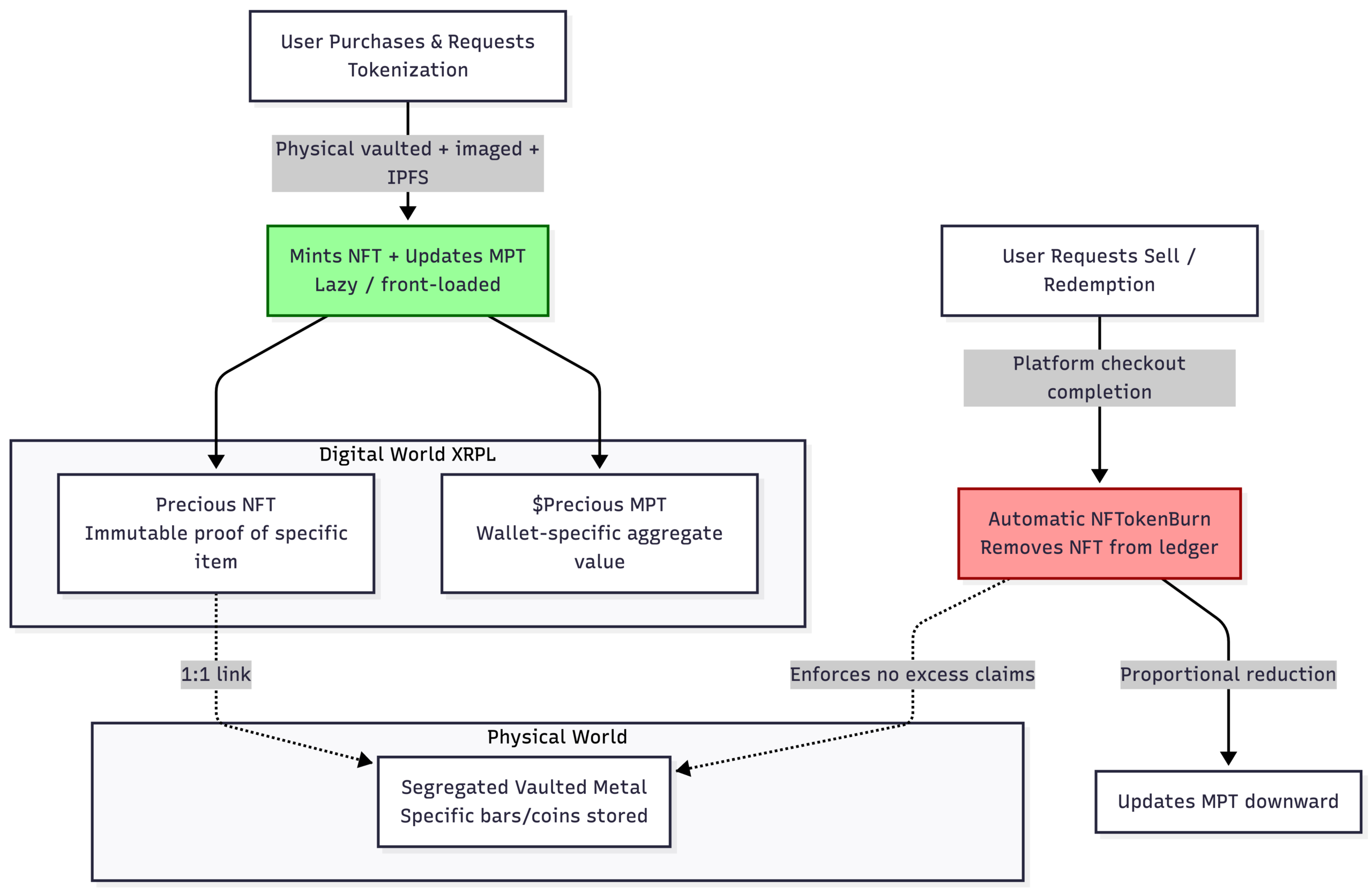
**Important Note**: Following minting, PRECIOUS NFTs enter a brief incontrovertible period during which they are non-transferable with the burn flag enabled. This temporary safeguard, in place during the platform’s initial launch phase, guarantees perfect alignment with the newly vaulted physical metal. Once this period ends, customers will be able to redeem or sell directly from their My Account page by burning the associated NFT(s), with the $PRECIOUS MPT updating automatically.
The front-end process is quick and easy as detailed below:

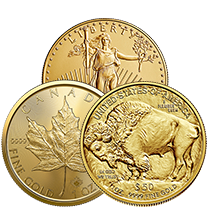
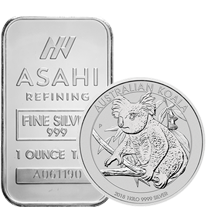
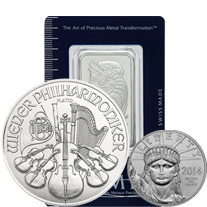
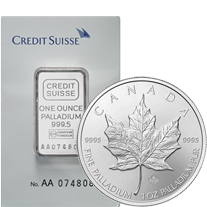
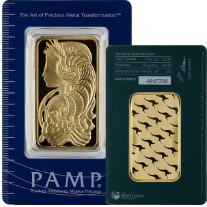
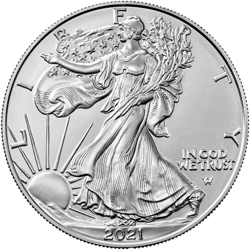
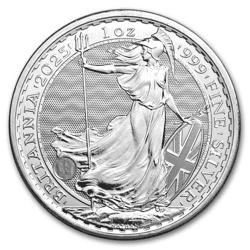
Browse thousands of Gold, Silver, Platinum and Palladium bars and coins. Click a category below to view metals examples

Add your favorite precious metals to your cart, just like you would at other online retailers. Click ‘View Cart’ to enter the cart page
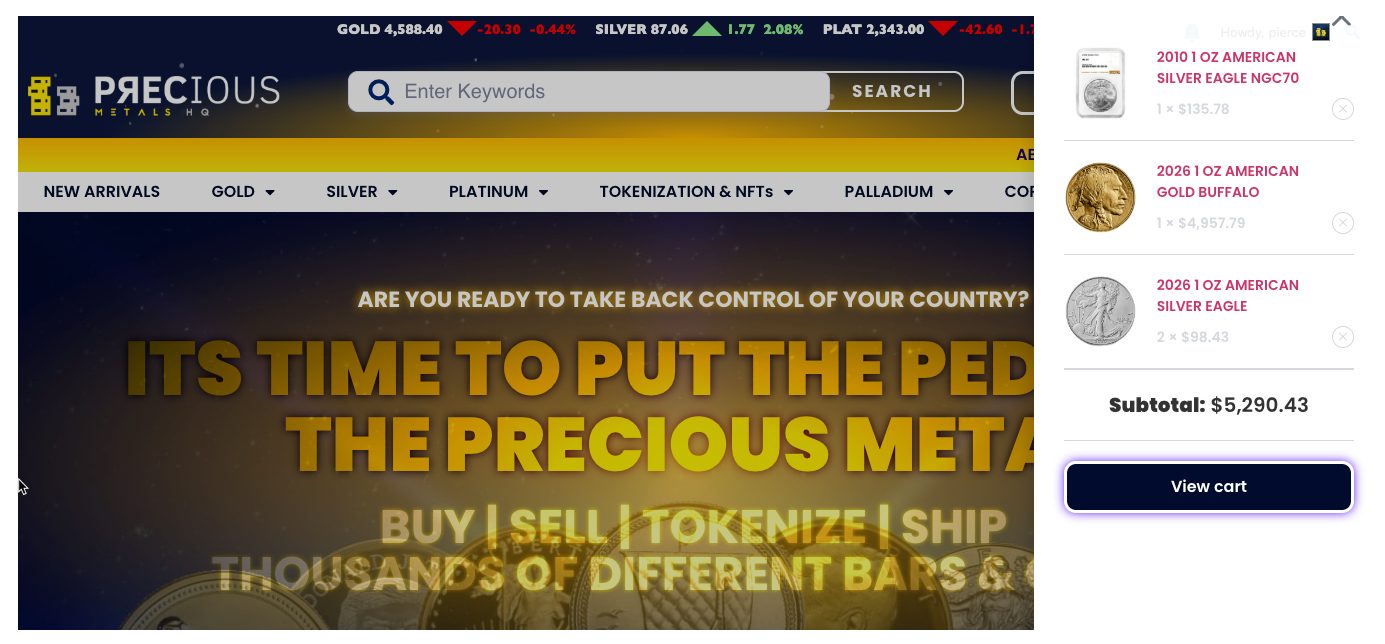
Figure 5: Add To Cart

Located at the top of the cart page, simply click the blue button ‘TOKENIZE MY PRECIOUS METALS‘ to trigger tokenization for your precious metals. If taking regular delivery, skip this step and continue a normal checkout experience.
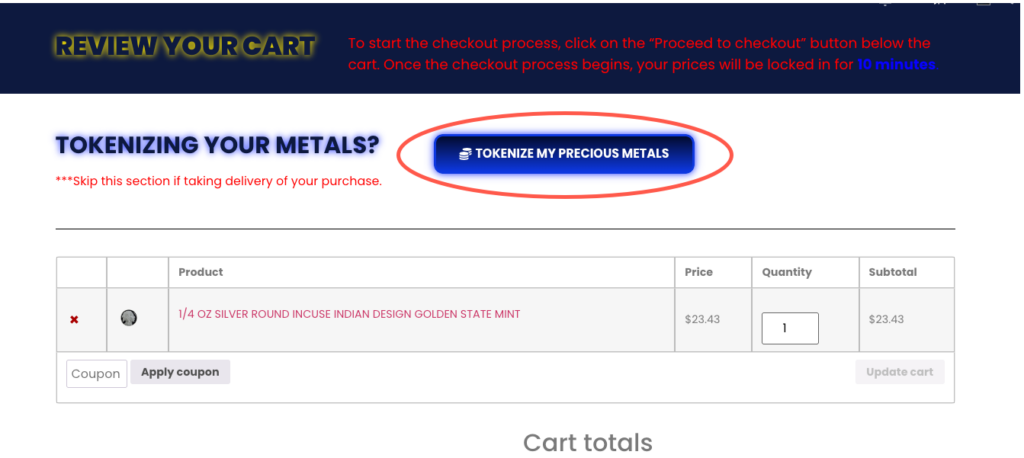
Figure 6: Select Tokenization
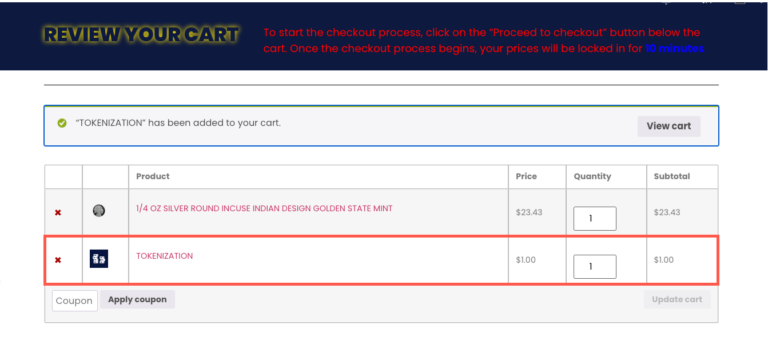

At checkout page, confirm your order details and click ‘PLACE ORDER NOW’
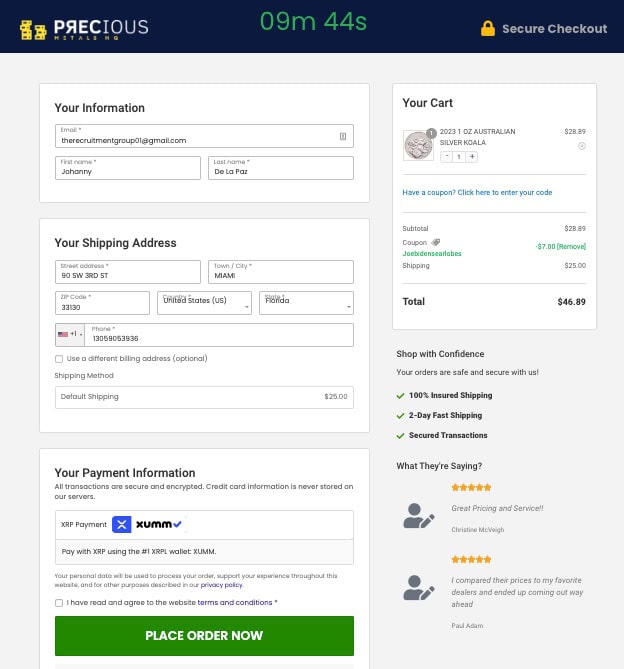
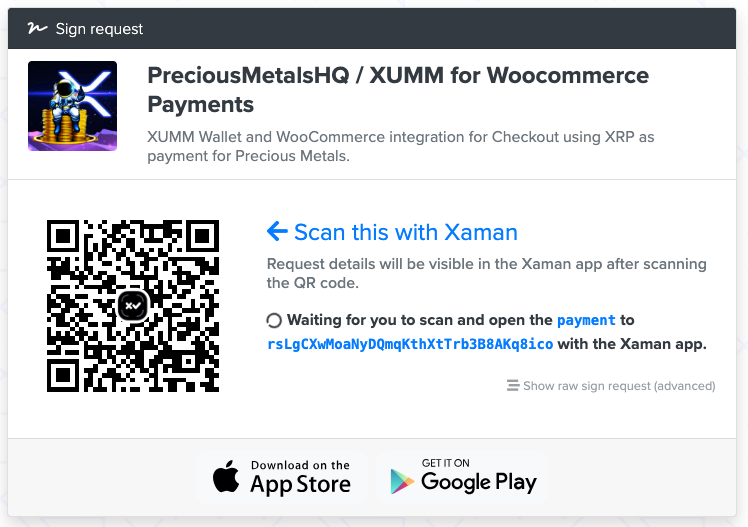
Figure 7: Complete Your Order

At the point of sale, the platform’s Tokenization Bridge enables customers to convert physical precious metals into modern digital currencies: a PRECIOUS NFT representing ownership of a specific piece of metal and a $PRECIOUS Multi-Purpose Token (MPT) tracking the portfolio’s aggregate value. On the order confirmation page, users are directed to their ‘My Account’ page to begin minting their NFTs and MPT. If you’ve chosen not to tokenize, then the process is over and your tracking information is sent to your email. See Below:
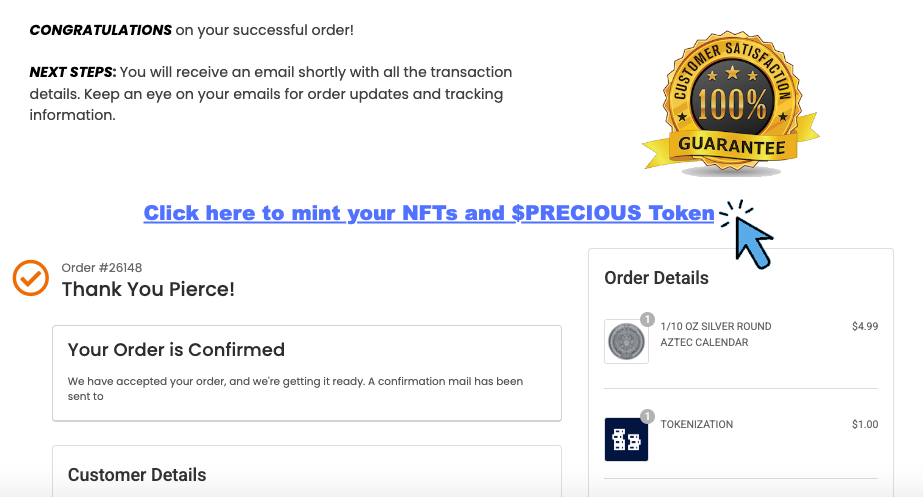
Once your order is complete, follow the link on the confirmation page
Figure 8: Confirmation Page
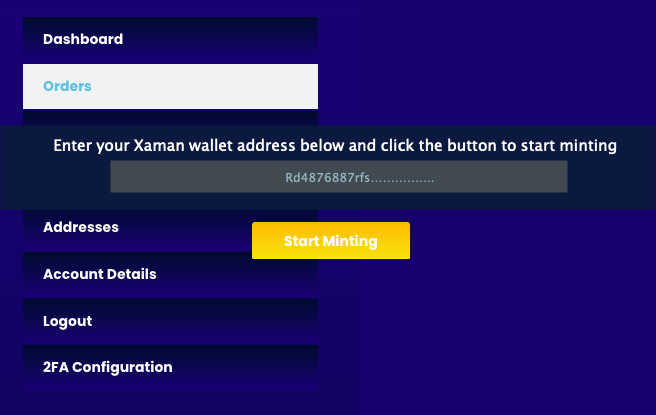
Mint your tokens at the orders tab. Begin by inputting the wallet address you want to hold your tokens in
Figure 9: Mint Your Tokens
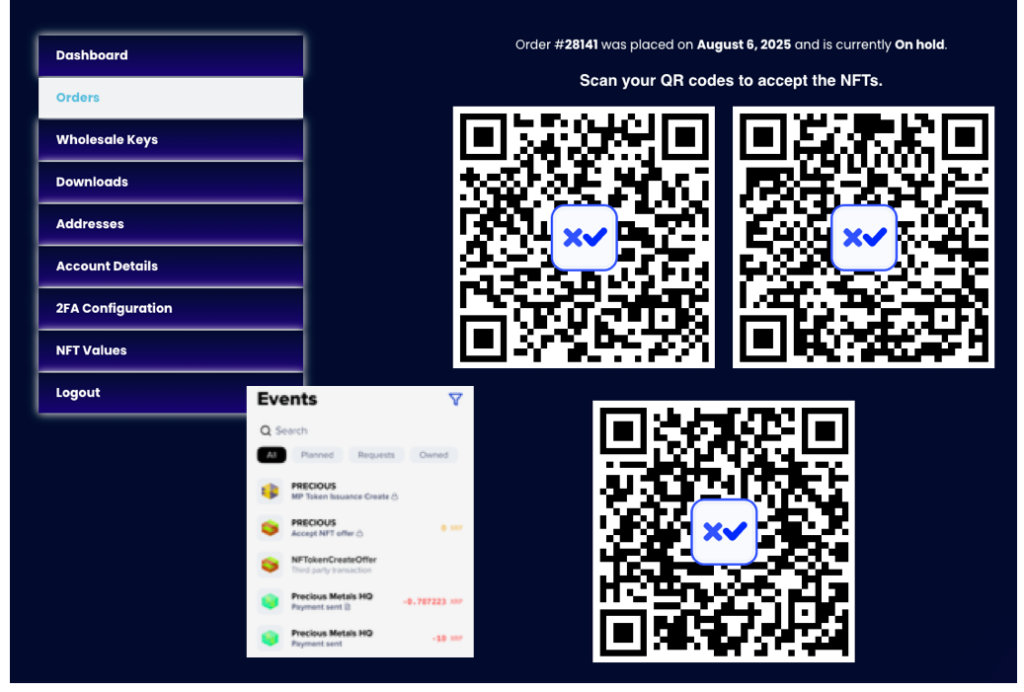
This populates your QR codes ready for you to scan
Figure 10: Mint Your Tokens Contd..
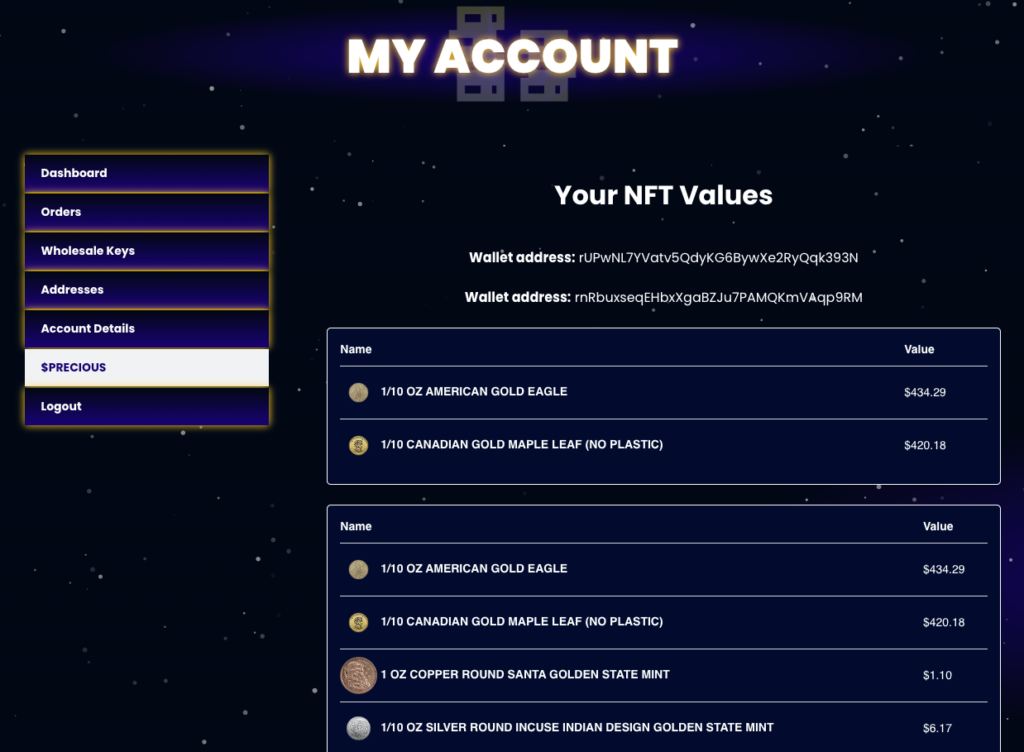
Each PRECIOUS NFT in the $PRECIOUS tab displays its corresponding live spot/market price, pulled in live from trusted external data feeds and updated dynamically, alongside high-resolution imagery, provenance metadata, and redemption options. This ensures users have immediate, at-a-glance insight into the current real-world value of their specifically allocated physical metal, while the $PRECIOUS MPT aggregates these individual values into a unified portfolio overview.
This dual-token system delivers both granular, immutable ownership of specific items (via PRECIOUS NFTs) and seamless, fungible portfolio utility (via the $PRECIOUS MPT), enabling users to hold, transfer, or trade with maximum flexibility across physical and digital contexts.
By grounding the PoA framework in a precious metals infrastructure, the PRECIOUS Metals HQ platform enhances system security and resilience. This dual-infrastructure model provides unique resilience: even in the face of server outages, cyberattacks, or regulatory disruptions to the digital layer, the system’s value remains intact because the intrinsic worth of the physical metals persists independently of any digital infrastructure.
Precious metals thus establish a natural price floor for the currency, anchoring its value to immutable, geology-constrained scarcity and intrinsic worth that no technical failure, network outage, cyber disruption, or emergency can breach, providing holders with an ultimate backstop and preserving economic sovereignty when digital layers falter.
PoA’s XRP Gold Standard ties digital currency to real-time supply and demand, fostering trust and accountability. By emphasizing individual, front-end allocation, PoA reverses the USD framework’s inequities, empowering users to tokenize assets directly. Allocation shapes individuals’ control over assets and their opportunities for wealth creation; by prioritizing allocation, PoA’s DeFi capabilities enable citizens to transition from purchasing tokenized offerings to issuing their own. This framework puts verifiable, asset-backed wealth creation directly in citizens’ hands.
The PoA framework is enabled by the platform’s integrated ecosystem components, which deliver a transparent and citizen-centric financial model, as detailed below.
The PRECIOUS Metals HQ platform is designed to minimize costs for sovereign citizens, offering a cost-efficient, transparent model that eliminates the excessive charges common in legacy financial systems and many blockchain platforms. Revenue is generated through transparent premiums on physical precious metals sales and a one-time lifetime membership fee, covering sourcing, operations, and all platform technology without ongoing extraction from customer activity. Once customers tokenize their metals, assets move onto the XRPL incurring only negligible network fees, with no trade, usage, or automation fees ever extracted by the platform. By operating natively on the XRPL and avoiding traditional processors (ACH, credit cards, Bitcoin, Ethereum), the platform removes those legacy payment costs entirely, delivering maximum affordability to customers. The platform guarantees the authenticity of all precious metals sold, whether purchased for physical delivery or tokenization.
This structure stands in sharp contrast to typical fintech and cryptocurrency applications, which, lacking underlying physical assets, often rely on recurring percentage-based fees to capture a piece of every transaction. This fee-based approach to financial “software services”, extracting value through perpetual tolls on transactions and economic activity, was popularized by the Federal Reserve, which embedded intermediary extraction and ongoing rents into the foundation of the modern fiat system.
By maintaining a simple, user-friendly traditional ecommerce design on the frontend while restructuring the backend into a full financial application, the platform optimizes processes end-to-end, eliminating legacy frictions and middlemen. PRECIOUS Metals HQ’s core business remains the sale of real precious metals, supplemented by the one-time membership option. As a direct result, all products and services, from bullion purchases to tokenization and membership benefits, are delivered at lower overall costs than traditional institutions, dealers, and blockchain platforms. We do not, and will never, charge ongoing fees for using our proprietary automation and tokenization systems. Instead of extracting value from customer activity, we pass those savings directly to the customer in the form of lower lifetime costs and higher long-term returns, preserving more of their investment ROI over time.
The PRECIOUS Metals HQ platform operates as a two-way exchange, enabling customers to buy, sell, or redeem precious metals at any time. For non-tokenized holdings (purchased elsewhere or delivered physically), users initiate a sell-back by shipping the metal to our accredited vault for inspection, assay (if required), and valuation at current market rates minus a transparent, competitive spread. For tokenized holdings, customers sell or redeem directly through the preciousmetalshq.com platform using a familiar checkout flow. Before checkout, the customer initiates burning of the associated PRECIOUS NFT(s) from their My Account page using XRPL native capabilities, updating the $PRECIOUS MPT to reflect the reduced portfolio value. The system then facilitates immediate settlement, crediting funds to the user’s preferred method or arranging secure physical redemption and shipment as selected. Members with the Keys to the Kingdom NFT receive priority fulfillment, enhanced customer service, and reduced spreads on buy and sell transactions, making liquid, sovereign-grade precious metals markets accessible to all.
This lean operating model aligns with the platform’s citizen-centric philosophy: technology serves the user, not the other way around.
The PRECIOUS Metals HQ ecosystem, powered by the XRPL for tokenization and settlement, comprises five integral components:
The application of precious metals APIs to power a conventional retail store, selling physical precious metals as isolated consumer products with only marginal public benefit, falls short by treating cryptocurrency merely as an alternative form of payment, without implementing underlying blockchain protocols for allocation or monetary function. This existing framework perpetuates fragmentation across dealers, vaults, custodians, and payment rails, separating real-world assets (RWAs) from true financial infrastructure. Unlike these models, the PRECIOUS Metals HQ ecosystem moves beyond treating metals as standalone retail commodities by delivering seamless systems integration across the exchange, vault, NFTs, MPT, and wallet layers, consolidating this historically fragmented system into a cohesive currency framework. This hyperfocused, lean architecture underpins the five integrated components that follow.
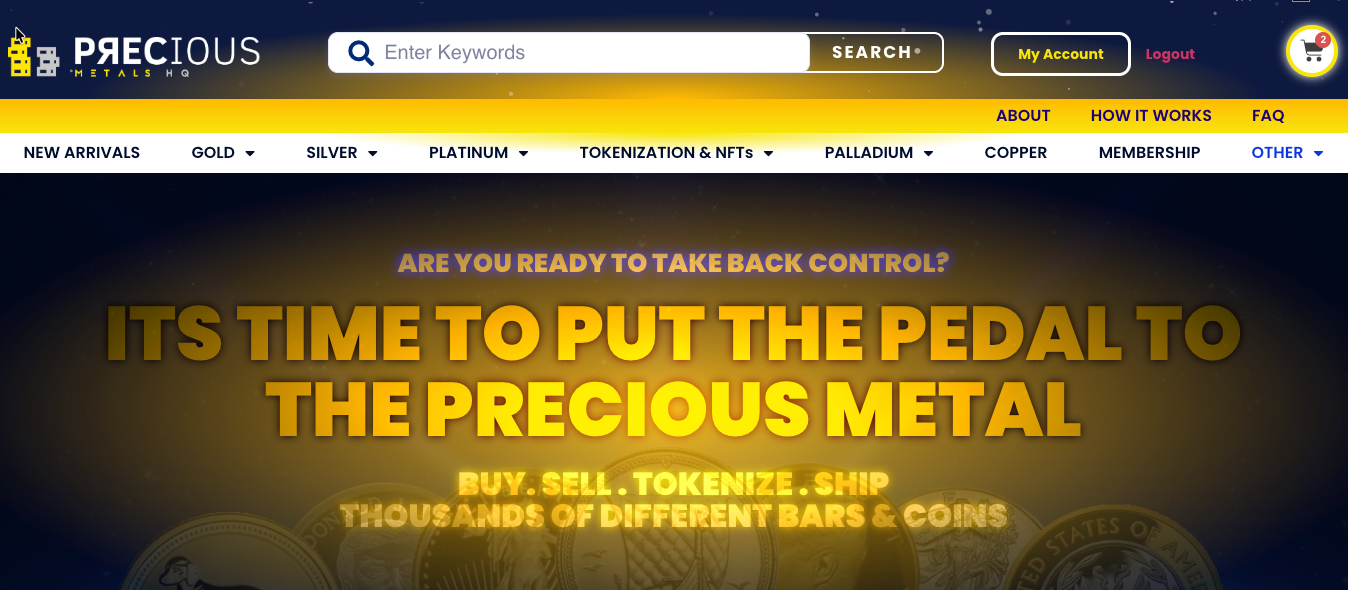
Figure 12: PRECIOUS Metals HQ Home Page
The PRECIOUS NFT is an immutable, on-chain certificate of ownership for a specific physical precious metal item, gold bar, silver coin, or other bullion, securely stored in the platform’s fully insured Class III vault. Minted only after purchase, vaulting, imaging, and IPFS pinning, each NFT represents a discrete, specific unit, eliminating counterparty risks and fractional-reserve practices inherent in unallocated models. Permanently linked to high-resolution images and provenance via IPFS, these NFTs deliver verifiable transparency on the XRPL, with direct peer-to-peer without third-party involvement transfers and trading. PRECIOUS NFTs further enable true peer-to-peer trading directly between wallets on the XRPL, with negligible fees and irrevocable settlement in seconds. This on-chain approach overcomes common limitations of centralized marketplaces, such as high intermediary fees, escrow risks, and limited provenance verification.
Holders redeem the corresponding physical metal (or receive cash equivalent) by initiating a sell or redemption through the preciousmetalshq.com platform. Using the same seamless checkout flow as tokenization, the customer burns the associated PRECIOUS NFT from their My Account page before checkout. This triggers secure valuation settlement, and shipment (or cash equivalent) at current market rates. See official XRPL NFToken concept and standards: https://xrpl.org/docs/concepts/tokens/nfts.
The $PRECIOUS Multi-Purpose Token (MPT) operates on a strictly citizen-centric model: only one MPT exists per wallet and dynamically tracks the live aggregate market value of the holder’s entire portfolio of tokenized precious metals. As customers tokenize additional items, the token’s value grows proportionally to reflect the increased vaulted holdings, while remaining a unified asset. This streamlined design simplifies portfolio management, ensures transparent valuation tied directly to physical assets, and prevents the inflationary over-issuance common in traditional currency systems. Selling or redeeming tokenized metals reduces the MPT’s aggregate value proportionally, maintaining accurate, real-time reflection of the holder’s vaulted portfolio. Explore $PRECIOUS MPT at https://preciousmetalshq.com/precious-token/
Our Bullion Vault is a highly secure, armed, and guarded Class III facility in Dallas, Texas, and accredited by LBMA, COMEX, ICE, and NCBA. Visit our Bullion Vault page (/bullion-vault/) for facility details, security features, and accreditation information. See [LBMA Associates & Warehouses confirmation](https://www.lbma.org.uk/market-standards/good-delivery). All customer metals are stored in segregated form by SKU, ensuring each PRECIOUS NFT and $PRECIOUS MPT is backed by specific physical units. For tokenized metals, PRECIOUS Metals HQ guarantees the specific location and availability of the physical metal in the vault. Real-time visibility into vaulted holdings is provided through the My Account dashboard, with the XRPL delivering permanent, verifiable proof of reserves and provenance. The vault supports full-cycle ownership by enabling seamless redemption of tokenized holdings and efficient processing of physical sell-backs, with all movements tracked transparently via the My Account dashboard.


Figure 15: Bullion Vault
The integration of these components ensures the PRECIOUS Metals HQ ecosystem is fully transparent and stands in contrast to the opaque, fee-laden legacy frameworks of existing platforms, delivering a reimagined financial system that restores trust and empowers sovereign citizens.
The PRECIOUS Metals HQ Tokenization Bridge is engineered as a Node.js application.for maximum simplicity and trust minimization using only native XRPL protocol features and the official xrpl.js library. No smart contracts or Hooks are deployed. Upon purchase, physical bullion is vaulted, imaged, and its metadata pinned to IPFS via Pinata. PRECIOUS NFTs are then lazily minted using standard NFTokenMint transactions, in high-volume scenarios via XRPL Tickets for collision-free batch processing. Ownership is transferred directly to the buyer through a zero-amount directed sell offer, which the buyer accepts via a secure, client-side Xaman-signed transaction powered by the Xaman SDK (for details see https://docs.xaman.dev/) for payload creation, PKCE authentication, and real-time confirmation. The $PRECIOUS Multi-Purpose Token conceptually tracks the aggregate real-time market value of a user’s portfolio by summing spot prices of all linked metals, with transparent metadata maintained off-chain and synchronized to IPFS. This architecture delivers verifiable ownership with negligible fees, near-instant finality, and segregated vaulting in which the platform serves solely as the customer’s agent, holding and managing specific physical units strictly on their behalf, without deployment, rehypothecation, or institutional extraction of value of the kind traditionally practiced by financial institutions. The Tokenization Bridge exemplifies efficient systems integration, combining Node.js orchestration, XRPL native features, IPFS provenance, external price feeds, and client-side XAMAN finalization without smart contracts.
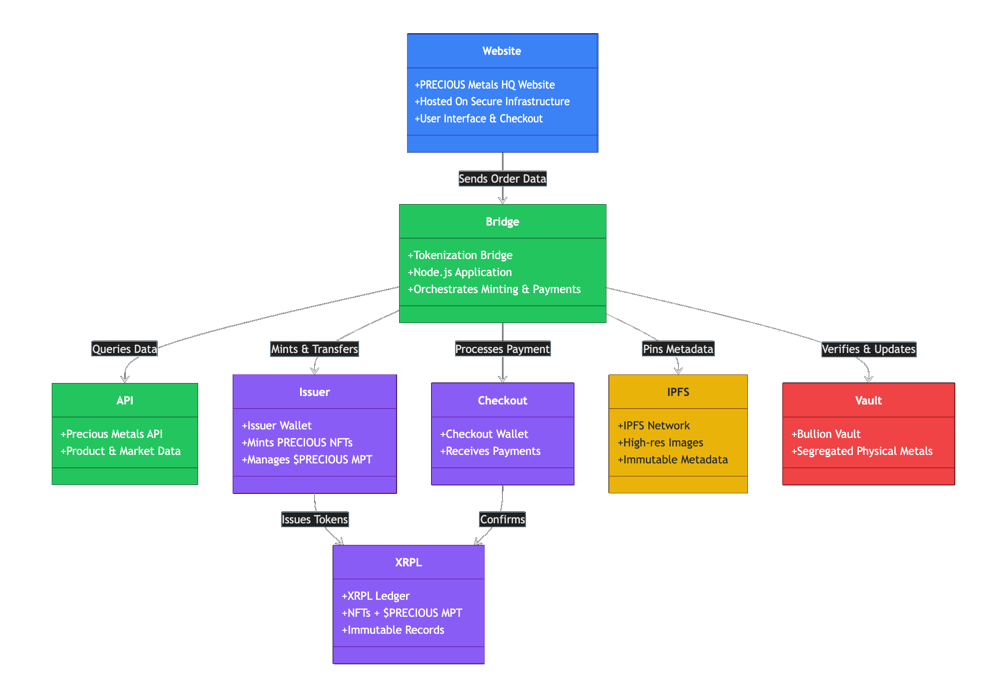
Figure 16: PRECIOUS Metals HQ System Architecture
Overview of the platform’s technical configuration, showing the user interaction with the PRECIOUS Metals HQ website, the central Tokenization Bridge (Node.js application), integration with the Precious Metals API, XRPL components (Issuer and Checkout wallets), IPFS for immutable metadata storage, and connection to the physical Bullion Vault.
Scalable Batch Minting Using XRPL Tickets
High-volume tokenization is supported natively by the XRPL Ticket system. A single TicketCreate transaction reserves the required sequence slots, allowing hundreds of Precious NFTs to be minted in parallel via NFTokenMint transactions without sequence conflicts. This production-grade approach ensures efficient, collision-free processing even during peak sales activity directly at the point of sale. See live XRPL mainnet activity, transactions, and tokens at [https://livenet.xrpl.org/](https://livenet.xrpl.org/), along with official documentation: [XRPL Tickets](https://xrpl.org/docs/concepts/accounts/tickets) and [XRPL NFToken (NFT) standards](https://xrpl.org/docs/concepts/tokens/nfts).
Dynamic $PRECIOUS MPT Valuation
The $PRECIOUS Multi-Purpose Token serves as a dynamic, user-specific portfolio tracker representing the aggregated live market value of all tokenized metals linked to a wallet. Rather than complex on-chain logic or traditional MPToken issuance, valuation is computed transparently off-chain by aggregating current precious metals market and product data sourced via a JSON REST API of the constituent vaulted items. Full metadata, including NFT IDs, IPFS links, and item details, is maintained locally per user address and permanently backed up to IPFS.
JSON REST API For Precious Metals Data
Real-time market data, spot prices, product details, and supporting assets (such as imagery and inventory information) are fetched via a secure JSON REST API from trusted external providers. This off-chain integration ensures accurate, up-to-date valuation and metadata for the $PRECIOUS MPT and PRECIOUS NFTs, while maintaining full transparency and avoiding on-chain overhead.
True Lazy Minting and Front-Loaded Allocation
The platform enforces strict lazy minting: no PRECIOUS NFT is created until physical bullion has been successfully purchased, vaulted, imaged, and its metadata pinned to IPFS. Minting occurs atomically during the checkout process, guaranteeing full allocation tied to specific physical units and preventing any possibility of pre-minting or unallocated tokens.
Direct IPFS Integration for Permanent Provenance
Each PRECIOUS NFT’s URI points directly to an ipfs:// link containing high-resolution imagery and structured JSON metadata, permanently pinned via Pinata. This native IPFS integration ensures verifiable, distributed, and tamper-proof provenance entirely independent of any central server or platform control.
Client-Side Finalization via XAMAN Payloads
All ownership transfers and critical actions are finalized client-side through user-signed transactions via Xaman QR codes or push notifications. This design reinforces trust minimization by keeping private keys and final acceptances under direct user control at every step.
Secure Client-Side Signing via XAMAN SDK
Critical actions, including ownership acceptance and minting confirmation, are finalized client-side through the Xaman SDK. It enables secure payload creation, PKCE OAuth2 authentication, user-signed transactions via Xaman QR codes or push notifications, and real-time WebSocket confirmations, ensuring private keys remain entirely under user control.
Mint-Burn Symmetry for Strict 1:1 Physical Backing
The platform enforces true 1:1 allocation between on-chain tokens and vaulted physical metal through symmetric minting and burning using XRPL native capabilities. PRECIOUS NFTs are lazily minted (via NFTokenMint) only after physical bullion is purchased, vaulted, imaged, and metadata pinned to IPFS, ensuring no token exists without a specific, segregated physical unit. On redemption or sale, the Tokenization Bridge automatically submits an NFTokenBurn transaction for each associated PRECIOUS NFT upon successful order completion in the preciousmetalshq.com checkout flow. This permanently removes the NFT from the ledger, preventing any residual or orphaned on-chain claims after the metal is physically released or cash equivalent settled. The burn is irrevocable, protocol-enforced, and executed without user key exposure or custom logic. This mint-burn lifecycle, combined with off-chain proportional MPT updates, guarantees that the total on-chain representation never exceeds (or lingers beyond) the verifiable physical holdings, eliminating counterparty risk, fractional-reserve practices, and detachment from physical reality that plague legacy and most tokenized asset models. For NFTokenBurn details, see: https://xrpl.org/nftokenburn.html.
The PRECIOUS Metals HQ platform stands today as an operational, end-to-end precious-metals tokenization system. Real metal is purchased, vaulted, and tokenized in a single atomic transaction on the XRPL. We view the current implementation as a production-grade proof of concept, an operational minimum that is more fundamentally sound and transparent than legacy or crypto ‘backed’ assets, thanks to our restructured currency model that synchronizes precious metals ownership, trading, and digital utility to deliver unmatched value, services, and sovereignty. Yet meaningful engineering, ecosystem expansion, and global scaling remain ahead.
The ultimate expression of PRECIOUS Metals HQ is the Metal DAO, a fully member-owned, decentralized organization that establishes the foundational framework for tokenizing and governing all Real World Assets (RWAs). Governance rights are tied directly to verifiable ownership of tokenized assets, enabling transparent treasury services for individuals and National Treasuries alike. This structure keeps the ecosystem aligned with its users, free from centralized gatekeepers, and fosters a financial order rooted in justice and illuminated by complete transparency. In this system of interconnected independence, citizens verify and control their wealth without intermediaries or elite oversight; tokenized precious metals and RWAs become equalizers, resilient against coercion, rewarding honest effort, and ensuring prosperity is a universal right grounded in immutable truth.
Achieving this horizon requires resolute progress across the following essential building blocks:
The Tokenization Bridge itself is designed for broader applicability, capable of integrating with any existing physical retail system to enable similar 1:1 allocated tokenization of diverse RWAs, extending the same verifiable, intermediary-free principles beyond precious metals to unlock wider economic sovereignty and real-world asset utility. Early architects of the U.S. monetary system anticipated metals and banks operating in concert, designing banking infrastructure, custody, vaults, and distribution network that remain in place today, ready for seamless repurposing into this transparent, asset-backed framework.
The XRP Gold Standard introduces a Loan Protocol that shifts capital distribution from debt to asset-backed credit. The Proof of Allocation framework enables a reserve currency model grounded in real collateral rather than debt and unsecured loans. Where the existing system relies on inflationary printing of new currency units and hidden money creation through secretive underwriting, PoA brings full transparency by verifying every asset directly on the blockchain.
By extending the natural divisibility of physical precious metals into the digital realm through non-inflationary ownership fractionalization and tying spendable digital tokens like XRP to real-time precious metals values, the protocol creates a sovereign foundation for credit distribution. Leveraging precious metals’ historically strong underwriting performance and secure loan rates, this approach delivers greater stability and individual sovereignty across the ecosystem.
This mechanism directly supports broader monetary innovations, such as the United States Treasury Dollar introduced earlier, by providing the transparent collateral and credit layer needed for a stable, non-inflationary reserve currency system.
We have proposed a modern framework for real-world asset (RWA) tokenization in the era of digital currency, exemplified by a precious-metals-backed sovereign currency framework on the XRP Ledger: the XRP Gold Standard.
Gold and silver were abandoned as functional money not because they failed, but because no technology existed to scale individual allocation in a digital age. Every modern “backed” asset, whether ETF, futures contract, or stablecoin, still relies on unallocated pools, delayed attestations, and institutional trust, detaching value from physical reality.
The Proof of Allocation (PoA) framework solves this by shifting allocation and verification to the front of the purchase process: minting a unique PRECIOUS NFT and updating a single $PRECIOUS MPT at the precise moment physical bullion is acquired and vaulted.
The resulting XRP Gold Standard is a monetary framework that delivers physical sovereignty, offline bearer capability, and digital finality in 3–5 seconds at negligible cost, free of middlemen, fractional reserves, or trust in custodians.
This new currency framework, grounded in constitutional sound money and proven blockchain infrastructure, is now available to individuals and nations alike. The XRPL has already proven its technical ability to supplant the Federal Reserve’s legacy banking stack. Major financial institutions worldwide have invested heavily in distributed ledgers over the past decade, integrating pilot programs and direct connections to networks like the XRPL, positioning them to adopt or interoperate with this model with minimal additional effort. Banks already possess the infrastructure to custody both precious metals and fiat, supported by established global distribution networks. Citizens have embraced electronic transactions for their convenience, evidenced by the worldwide decline in cash usage, yet this framework preserves that digital ease while supporting freedom through a sound, physical foundation.
By anchoring the system in precious metals with strict 1:1 value matching for public circulation (mirroring the mechanics of the current U.S. dollar’s distribution but secured by tangible, physical assets rather than promises), the XRP Gold Standard offers a practical, citizen-centric evolution that leverages existing institutional and consumer infrastructure. The protocol is therefore even more ready for real-world deployment than conventional analyses suggest, no radical overhaul of banking systems, citizen behavior, or technology is required.
For deeper exploration of the PRECIOUS Metals HQ platform, the Proof of Allocation framework, tokenization mechanics, user tools, security details, and practical next steps, please visit the following resources. These live pages offer hands-on information, demonstrations, support, and legal transparency to complement the concepts in this whitepaper:
11.1 Platform Links
11.2 XRPL Technical Resources
11.3 Regulatory Sources
NEED HELP? Tell us more…